

The Hands of the Land
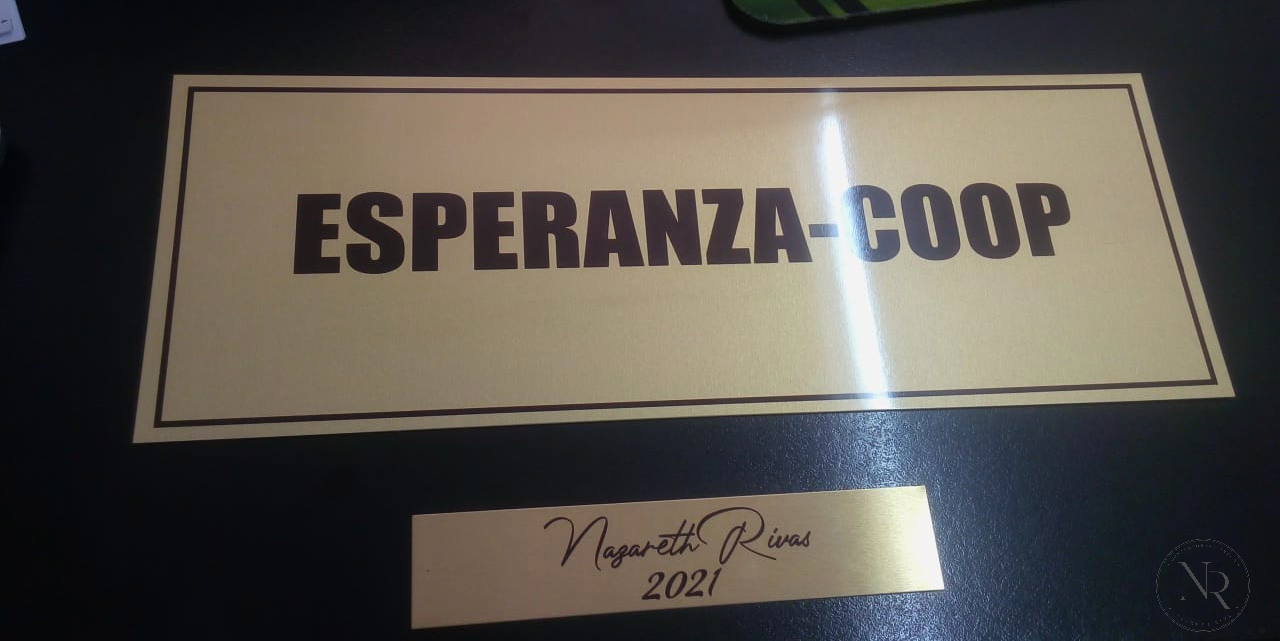
The idea for this work began through a conversation with people from Esperanza Coop, an
organization dedicated to the production and export of beans in Nicaragua. They had always
wanted to have one of my works, but they did not yet have a clear idea of what they wanted.
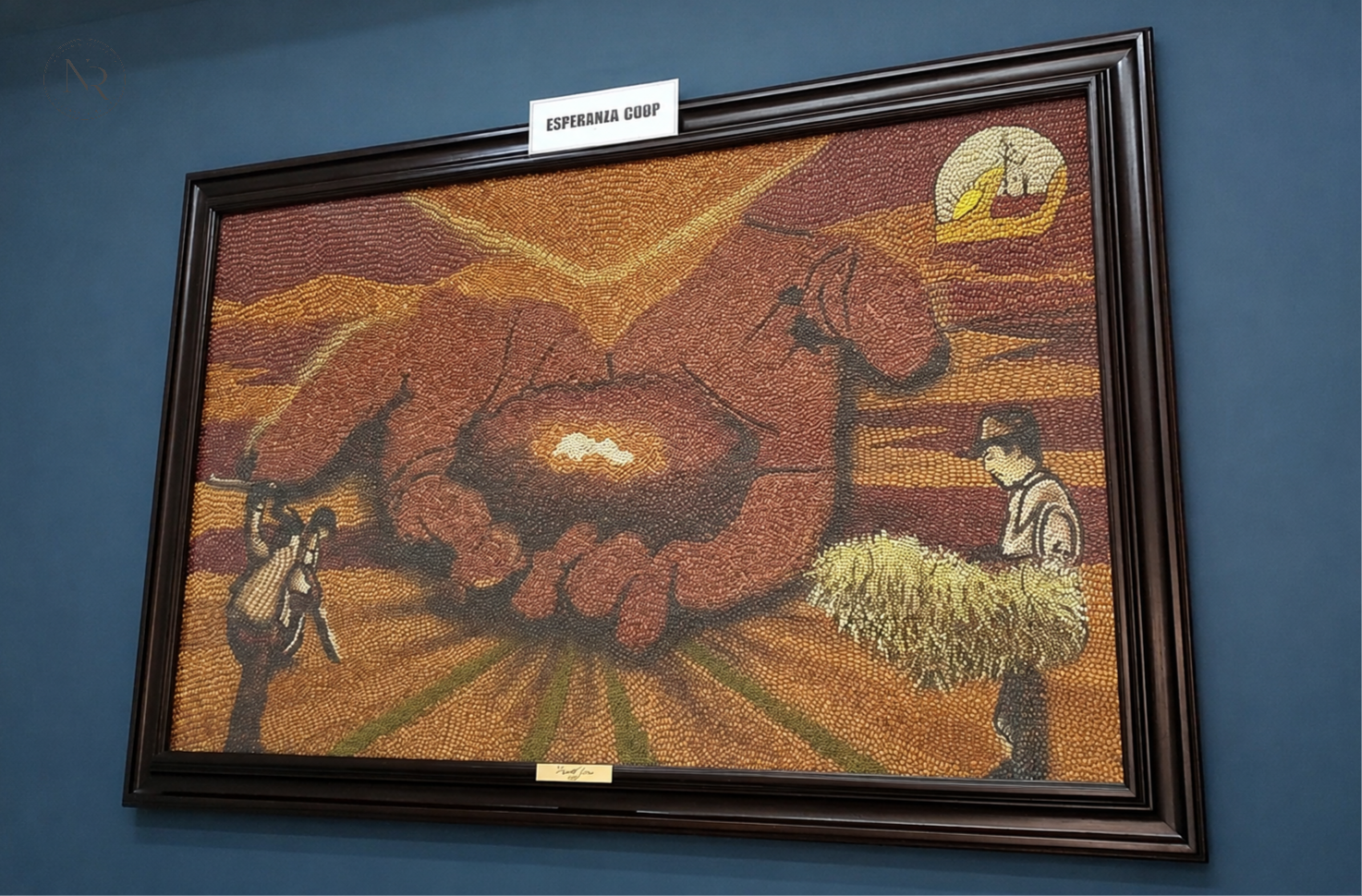
I proposed creating a work using the different varieties of beans found in Nicaragua, transforming a familiar element, deeply connected to our culture, into the main artistic medium. From the beginning, my intention was for the beans to carry a deeper meaning. The scene symbolically represents the hands of Nicaraguan farmers—the hands that work the land, cultivate, harvest, and sustain so much of the life that comes from it.
The work depicts a moment during the harvest: the sun begins to rise as farmers work the fields and beat the dried plants with sticks to release the beans. I wanted to represent not only the result of the harvest, but also the work and effort behind it.
Creative process


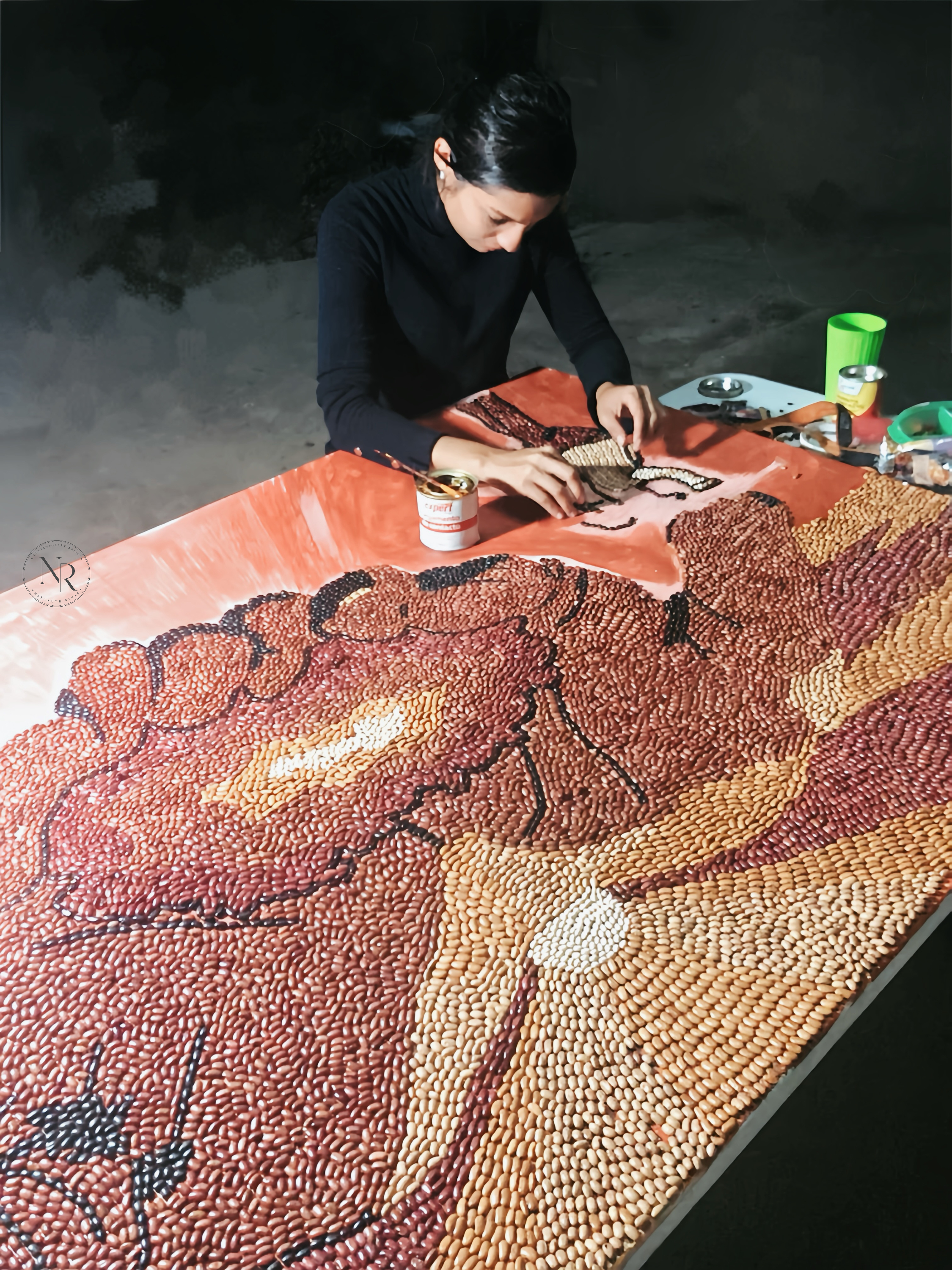
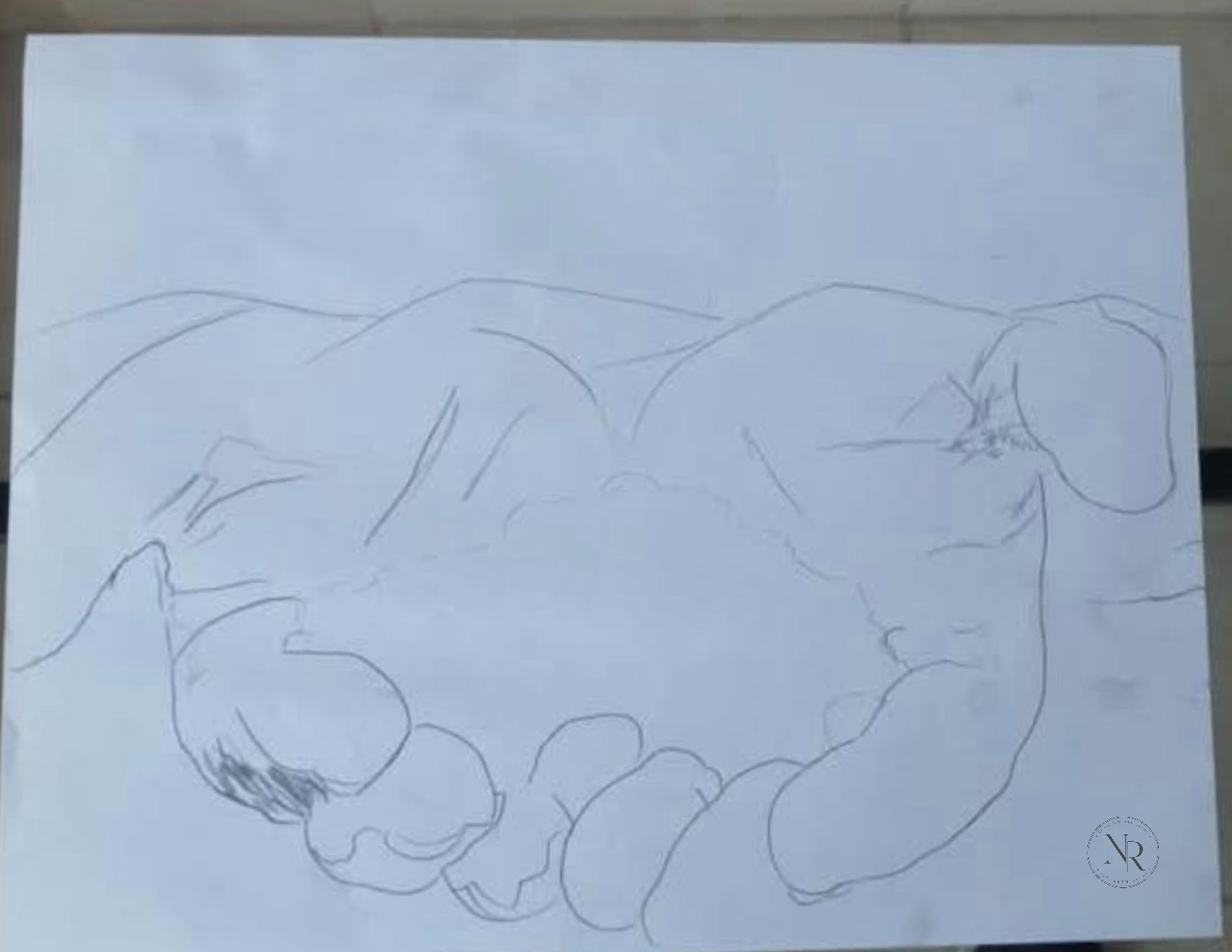
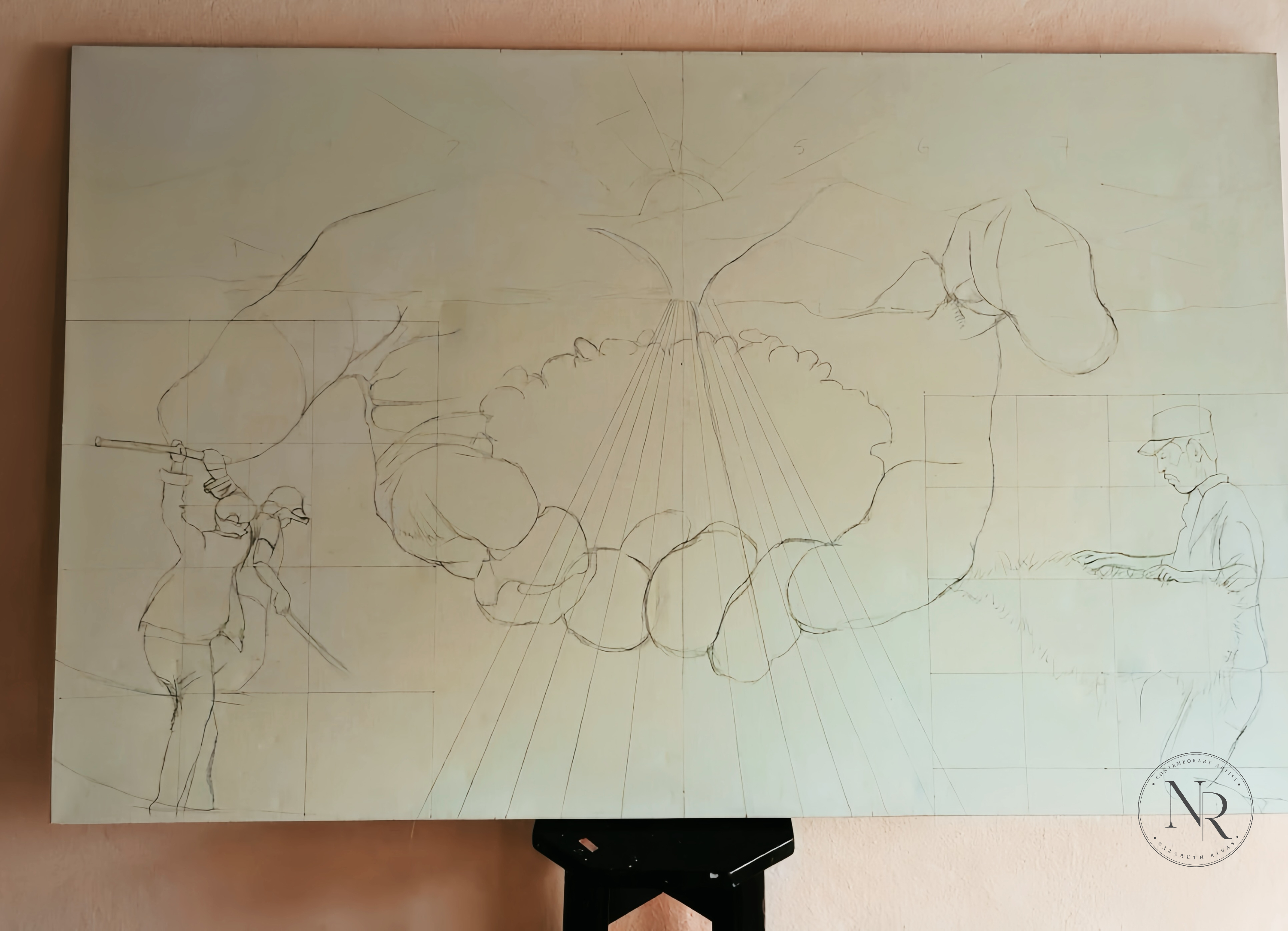
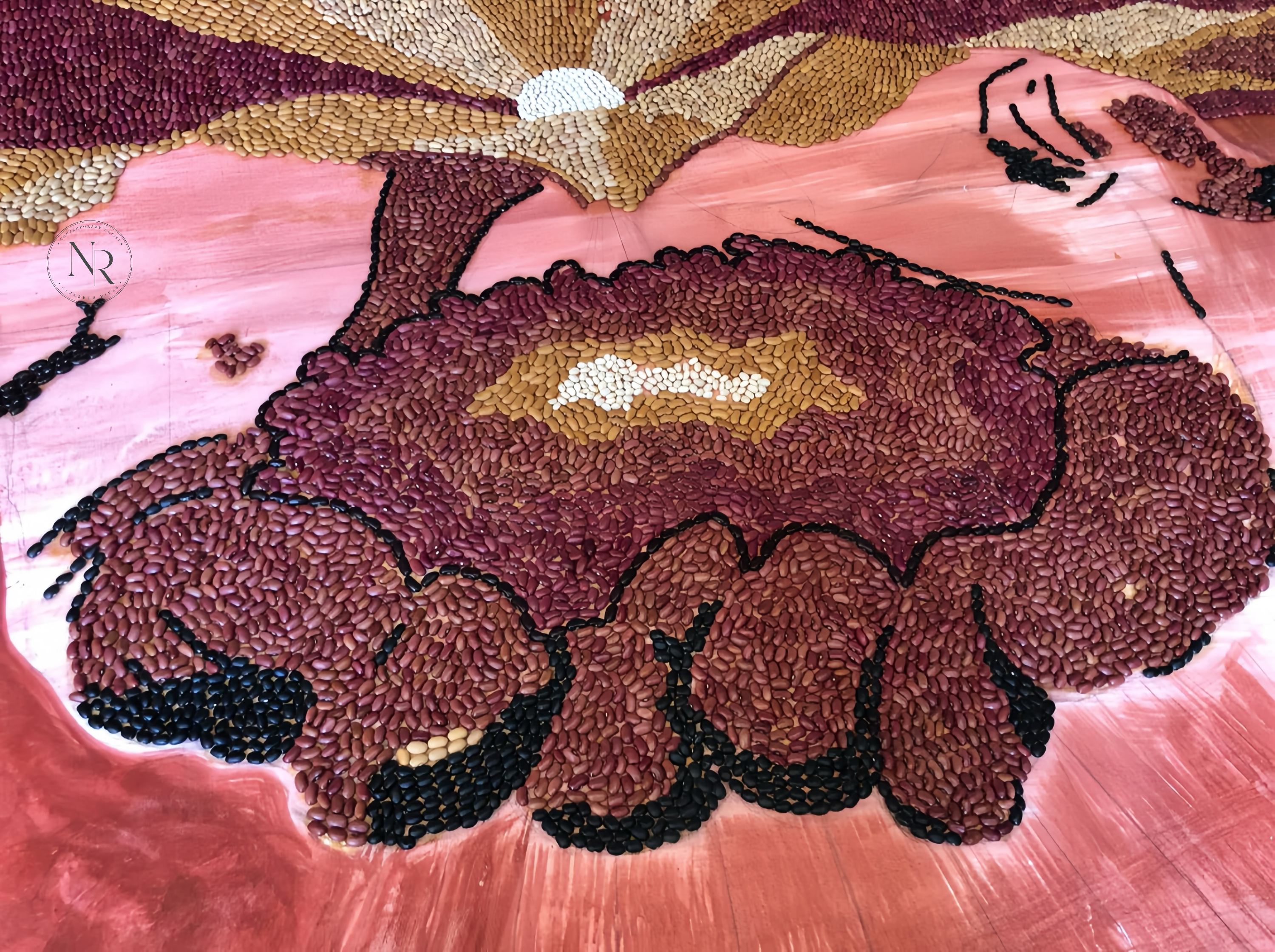
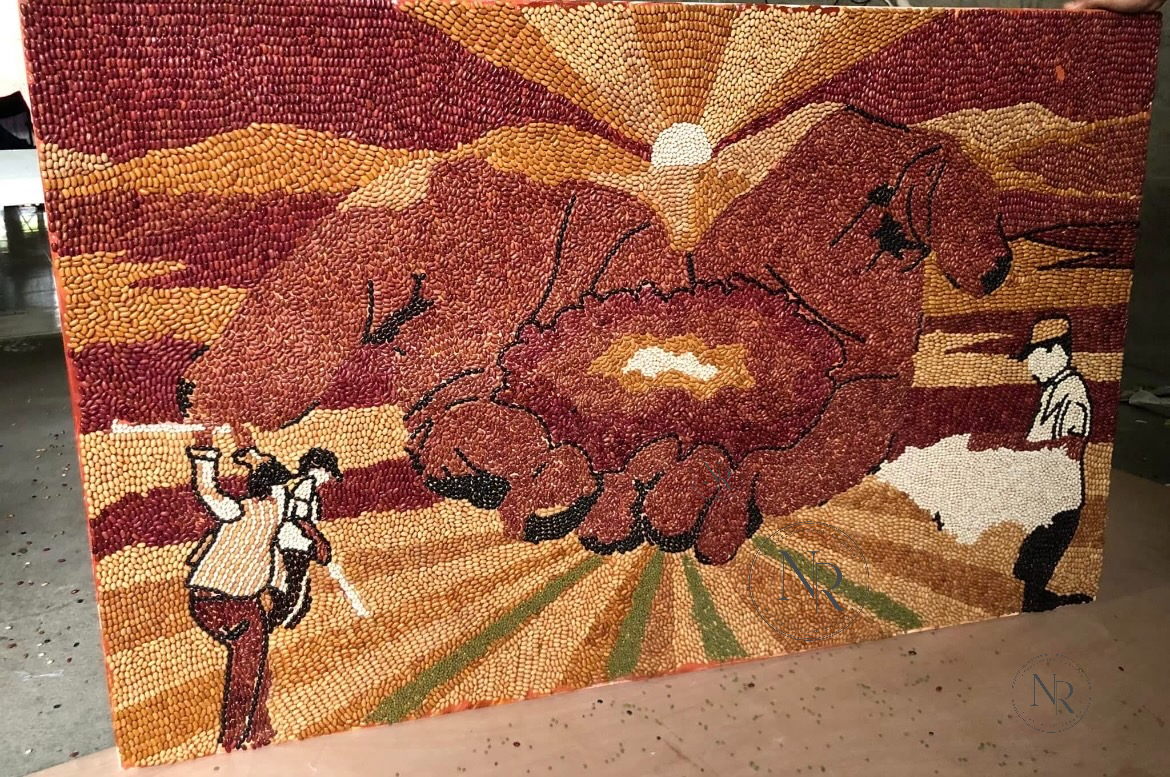
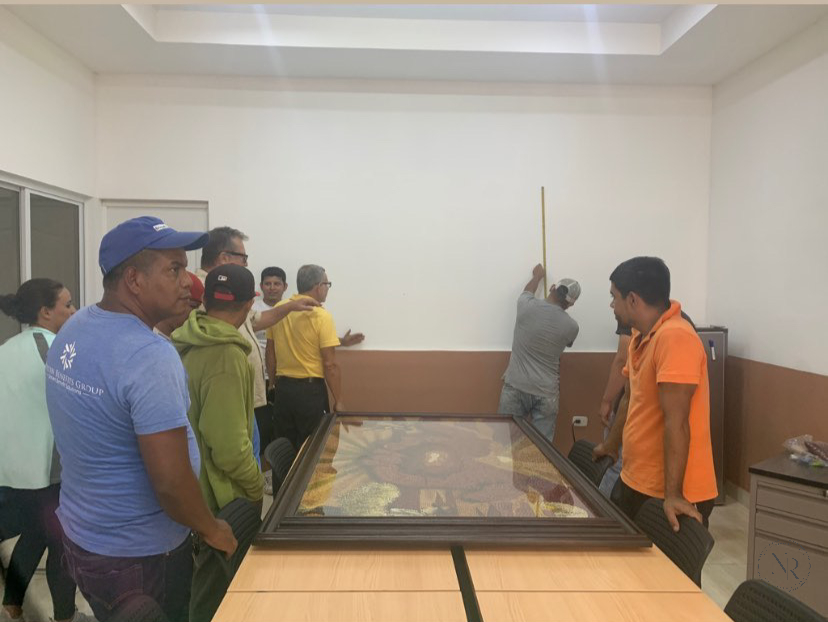
To construct the image, I began researching the different varieties and colors of beans available in Nicaragua. Each variety offered a different tone and texture, allowing me to build the composition using these natural elements.
I had never created a work in this way before. Each bean had to be carefully selected and positioned, turning the process into something similar to assembling a huge puzzle. It required many hours of patience, precision, and attention to detail.
There were moments when I wondered whether I would be able to finish it. Yet, little by little, as each piece found its place, the image began to emerge. What initially appeared to be thousands of individual elements gradually became a single, unified scene.
The Hands of the Land became more than a work created with an unconventional material. It became a tribute to Nicaraguan farmers and to the relationship between the land, labor, and identity. Each bean forms part of the image, but also represents a small part of a much larger story: the story of the hands that cultivate our land and make the harvest possible.